
Blog > What Are the Challenges of Working in Real Estate?

Most people see the end of the story. A smiling couple, a set of keys, a sold sign on the lawn. What they do not see is the three months of showings before that, the deal that fell apart twice, the late-night calls, and the weeks when no commission check showed up at all.
Real estate can be a rewarding career, and plenty of people build great businesses in it. But it is also one of those jobs that looks easier than it is. If you are thinking about becoming an agent, or you just want to understand why your agent always seems to be on the phone, here are the challenges that come up again and again.

Why this job is harder than it looks
Most agents are independent contractors. That means freedom, but it also means you are running a small business. You are the salesperson, the marketer, the bookkeeper, and the customer service team, all at once, and nobody pays you until a deal closes.

1. Income that comes in lumps
A normal job pays you every two weeks. Real estate does not. You might work with a buyer for four months, then get paid once, at closing. If that deal collapses, you could get nothing for all that time. One month might bring in a big check, and the next two might bring nothing.
That makes budgeting hard. It is also stressful, because even when business is good, you know it can slow down. Agents often describe the feeling as being busy and broke at the same time.

2. Paying costs before you get paid
New agents are often surprised by how much it costs to work in real estate. You spend money to get licensed, to join the right organizations, to market yourself, and to keep your business running, and you do it all before you earn a dollar.



3. Long hours and no real off switch
Home buyers and sellers have jobs and families, so they want to see houses on evenings and weekends. Offers also come in at all hours, and a deadline does not care that it is Sunday night. Many agents say the hardest part is not the number of hours. It is that the work never fully ends.
Setting boundaries takes real effort. Without them, it is easy to answer every text at 10 pm and miss dinner with your own family. The agents who last tend to decide ahead of time when they are off, and then stick to it.
4. Finding clients never stops
This surprises many new agents more than anything else. Getting a license does not give you clients. Half of the job is sales and marketing, and it never ends. While you help one client, you also have to be finding the next one.
That means making calls, sending messages, posting on social media, going to events, and asking past clients for referrals. Some people enjoy it. Many do not, and that is one of the main reasons agents leave the business in the first few years.
- Build a simple routine. A little outreach every day works better than a big push once a month.
- Stay in touch with past clients. Referrals and repeat clients are often the steadiest source of business.
- Pick a focus. An agent who is known for a specific area or type of client is easier to remember than one who says "I do everything."
5. Carrying other people's stress
Buying or selling a home is one of the biggest financial moves most people ever make, and it often happens during other big changes like a new baby, a job move, a divorce, or the loss of a family member. Clients bring that stress to the table, and the agent is the person standing right there when it spills over.
There is also rejection. Some people say no. Some sign with another agent after you spent weeks helping them. Some disappear. You learn quickly not to take it personally, but it still wears on you.
6. Deals that fall apart
Even a smooth deal has many moving parts. The loan, the inspection, the appraisal, the title work, and the closing date all have to line up. When one piece breaks, the whole deal can fall apart, and you do not get paid.
It is a hard moment for everyone. The buyer is disappointed, the seller is frustrated, and the agent has put in weeks of work with nothing to show for it. Good agents learn to step in calmly, find solutions, and keep both sides talking. That skill takes time to build.
7. A market you cannot control
Agents cannot set interest rates, change how many homes are for sale, or decide how people feel about the economy. But all of those things can slow business down overnight. When rates climb or buyers get nervous, fewer people shop, and your income can drop even if you are doing everything right.
The industry itself also keeps changing. New technology, new rules about how agents get paid, and new tools that clients can use on their own mean agents have to keep learning and keep proving their value. Standing still is risky.

8. Legal responsibility and a lot of paperwork
Agents handle contracts that involve hundreds of thousands of dollars, and the details matter. A missed deadline, a wrong date, or a missing disclosure can cost a client real money, and clients sometimes look to the agent when something goes wrong.
Agents are also held to professional and legal standards, and they have to follow state rules and their brokerage's policies. That is why most agents carry insurance and why good ones are careful about writing things down and double-checking the details.
How successful agents deal with these challenges




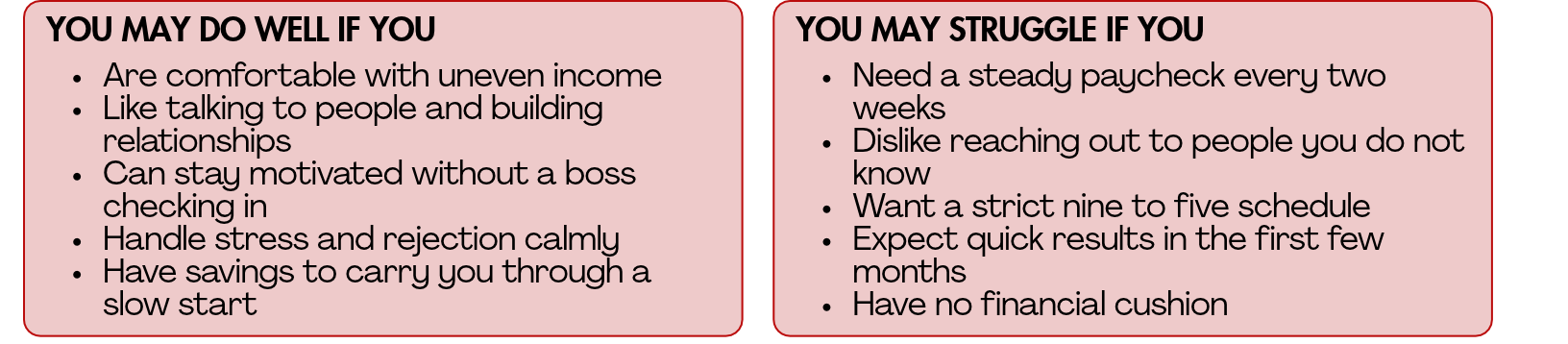
Questions to ask yourself before you start

The Bottom Line
Working in real estate means unsteady income, upfront costs, long hours, constant prospecting, emotional pressure, deals that sometimes collapse, a market you cannot control, and real legal responsibility. None of that makes it a bad career. It just means it is a business, not a simple job, and the people who succeed treat it that way. If you go in with savings, a plan for finding clients, good boundaries, and a brokerage that supports you, the challenges become much easier to manage.
GET MORE INFORMATION
