
Blog > Phoenix Housing Market Update: What Buyers and Sellers Need to Know Right Now
Phoenix Housing Market Update: What Buyers and Sellers Need to Know Right Now
by

If you only read the headlines about the Phoenix housing market, you might think one of two things:
Home prices are crashing.
Or...
Phoenix real estate is still booming.
The truth is somewhere in the middle.
The latest housing data shows that the Phoenix market has changed quite a bit from the crazy market we experienced a few years ago. But it also shows something important:
There isn't one Phoenix housing market anymore.
Some areas are doing better than others. Luxury homes are behaving differently than typical homes. And buyers and sellers have very different opportunities right now.
But before we look at what's happening today, it's helpful to zoom out.
Home Values Don't Move in a Straight Line
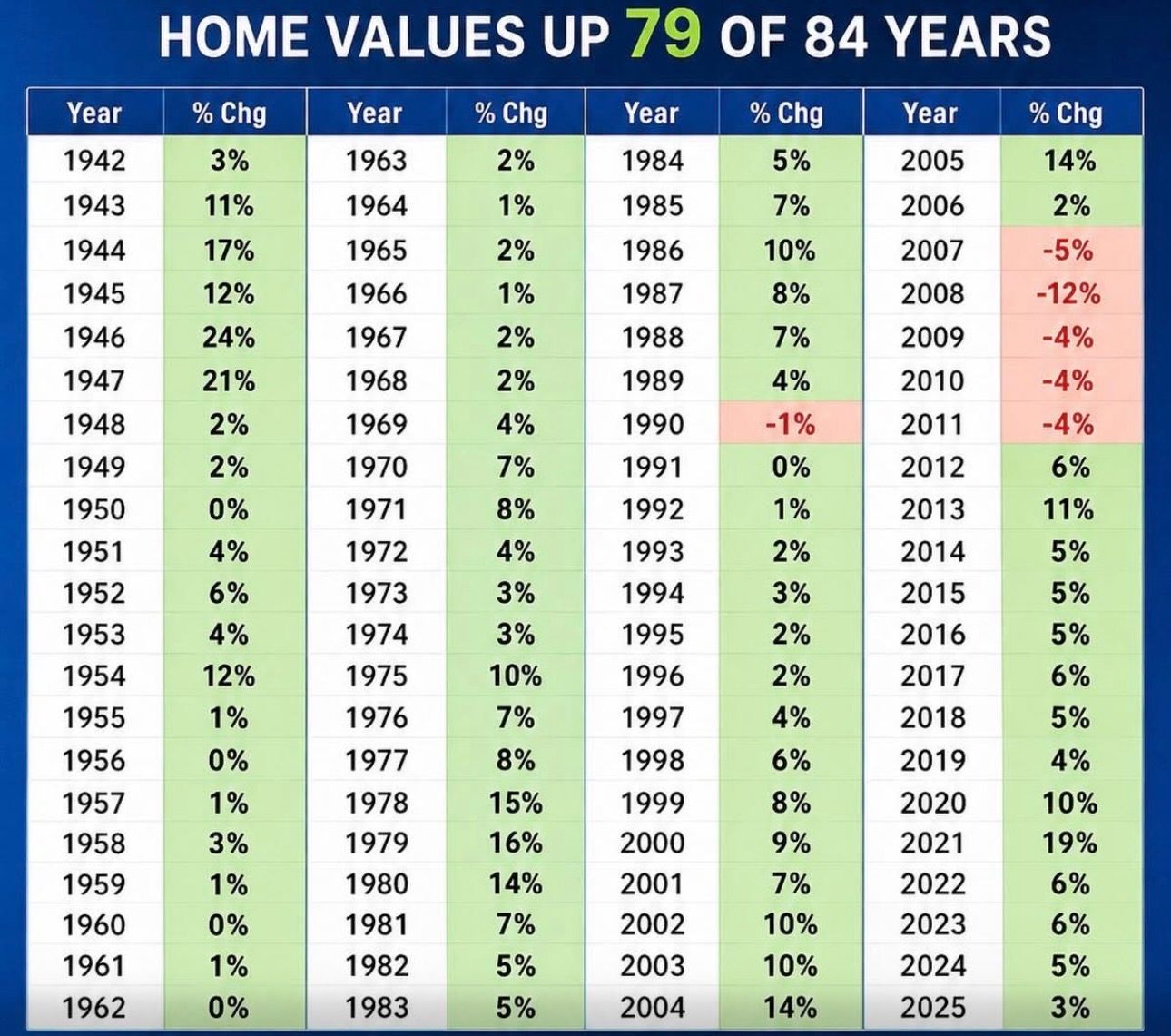
The chart above is a great reminder of something that's easy to forget when we're focused on today's market.
There have been years when home values went up a lot, years when they barely moved and years when they went down.
Look at 2007 through 2011. According to the historical data shown in the chart, home values declined for five straight years.
Then look at what happened afterward.
The chart shows positive growth every year from 2012 through 2025, including double-digit gains in 2013, 2020 and 2021.
That's an important lesson for both buyers and sellers:
Real estate should usually be viewed over years, not months.
Trying to perfectly time the housing market can be extremely difficult. What matters more is understanding the market you're in today and making a decision that makes sense for your life.
First: Phoenix Home Prices Are Not Crashing
Let's start with one of the biggest questions people have:
Are Phoenix home prices falling?
A little — but probably not the way you might think from some of the headlines.
As of mid-August, the median home price across the Phoenix-area market was about $449,900. That's down slightly from $451,000 the month before, but it's actually higher than the $440,000 median price from a year ago.
In other words, prices have been relatively stable.
The data also suggests prices could soften a little more through the end of summer. That's not especially surprising. Summer is typically one of the slower times of year for Phoenix real estate.
So if you're waiting for evidence of a massive housing crash, the current numbers simply aren't showing one.
But We're Definitely Not in the 2021 Market Anymore
This is where sellers need to pay attention.
Most of the Phoenix market hit its high point around 2022. Since then, prices in many areas have either flattened or moved lower.
For example, single-family home values measured by price per square foot are down from their previous highs by approximately:
- Southeast Valley: 9.3%
- Pinal area: 10.3%
- West Valley: 12.8%
- South Phoenix: 10.4%
- North Phoenix: 4.0%
That doesn't mean every individual home has lost that exact amount. Real estate is much more local than that.
But it tells us something important:
Sellers can't price their homes based on what their neighbor got during the hottest part of the market.
The market has changed.
What Phoenix Home Sellers Need to Know
Today's buyers have choices.
That means simply putting a home on the market at an aggressive price and waiting for someone to buy it isn't a great strategy.
However, there is encouraging news.
Several cities have recently started moving in a direction that is more favorable to sellers.
Chandler, Gilbert and Queen Creek all improved during the latest month. Chandler remains one of the stronger markets in the Valley, while Gilbert has also improved. Queen Creek is improving slightly but remains much more favorable to buyers.
The Southeast Valley overall has also shown signs of stabilizing.
For sellers, the lesson is simple:
Homes are still selling. But pricing and presentation matter much more than they did a few years ago.
If your home is priced correctly, shows well and is marketed properly, there are buyers in the market.
If you're overpriced, buyers now have enough alternatives to simply move on.
And this is where the historical chart matters.
A seller who looks at 2020 or 2021 and expects that kind of appreciation every year is likely to be disappointed. Those were unusual years. There have always been slower periods in real estate.
A normal market doesn't mean a bad market.
What Phoenix Home Buyers Need to Know
Buyers may actually have one of the better opportunities they've had in several years.
Think back to 2021 and early 2022.
Buyers were competing against dozens of offers. Homes sometimes sold almost immediately. Buyers were frequently making aggressive offers just to have a chance.
That environment is gone.
Today's buyer generally has more time, more choices and more negotiating power.
There's another interesting piece of the Phoenix data.
Homes under 2,000 square feet have become roughly 16% to 17% less expensive compared with inflation since 2022.
That doesn't mean the actual price tag on those homes fell 17%. It means the cost of everything else has risen while these home prices have mostly stayed flat or declined.
For someone who has been sitting on the sidelines waiting for the market to become more reasonable, the market has already moved significantly in the buyer's direction.
Should Buyers Wait for Prices to Drop More?
This is where I think the historical chart becomes especially useful.
Nobody knows exactly what home prices will do next year.
Could Phoenix prices move down a little more? Absolutely.
Could they stay relatively flat? Yes.
Could they start moving higher again? That's possible too.
History shows why making a home-buying decision based entirely on predicting next year's price can be risky.
The chart shows a handful of down years surrounded by long stretches of rising values. It also shows that after the major housing downturn from 2007 through 2011, values eventually returned to growth.
That doesn't mean history will repeat itself. It means short-term price movements and long-term homeownership are two very different things.
If you find the right home, can comfortably afford the payment and expect to own it for several years, today's negotiating opportunities may matter more than trying to perfectly predict the bottom of the market.
Phoenix Is Really Several Different Housing Markets
This may be the most important takeaway from all of the current data.
Look at some of the differences around the Valley.
Chandler is currently much more favorable to sellers than Queen Creek or San Tan Valley. Scottsdale is stronger than Mesa. And the luxury market is behaving very differently from the typical housing market.
In fact, homes selling for more than $2 million have performed surprisingly well.
Since May 2022, the typical Phoenix-area market below $2 million is down about 10% per square foot, while the $2 million-plus market is actually about 5% higher.
Even more interesting, luxury home sales have increased. Monthly sales above $2 million averaged about 115 per month in 2022 compared with approximately 178 per month so far in 2026.
That's why broad headlines about "Phoenix home prices" can sometimes be misleading.
Your market depends on where your home is, what type of home it is and what price range you're in.
Is This Another 2008?
This question comes up a lot, especially when people see prices soften.
There is one number I'm watching carefully.
The number of homeowners experiencing financial trouble has been increasing.
About 94.6% of homes currently under contract are normal sales, while roughly 5.4% involve some form of foreclosure-related situation. That's higher than it was a year ago.
That's worth watching.
But perspective matters.
During the aftermath of the last housing crash, normal sales represented less than 25% of the market at times. Today we're still around 95%.
So there are some early warning signs, but the current market looks nothing like the foreclosure crisis following 2008.
And again, look at the historical chart.
The housing crash stands out because it was unusual. Five consecutive years of falling home values is not what we normally see.
Zoom Out and the Picture Changes
There's one final piece of Phoenix data I think homeowners should see.
Real estate doesn't usually make much sense when we judge it over one month or even one year.
When we zoom out, the picture looks very different.
Depending on the size of the home, Phoenix-area homes have increased roughly 94% to 143% in price per square foot over the last 10 years.
Even after accounting for inflation, every home-size category studied showed significant long-term appreciation.
That lines up with the bigger lesson shown in the historical chart:
Housing will have good years, slow years and occasionally bad years. The long-term trend is what matters most.
That's why I wouldn't make a real estate decision based solely on whether prices might rise or fall a few percentage points over the next six months.
The Bottom Line
If you're selling: This isn't the market where you can simply name your price. Buyers have options. Sellers who understand their competition, price realistically and properly prepare their home have a much better chance of getting sold.
If you're buying: You have leverage that buyers haven't had in years. There are more opportunities to negotiate, and many parts of the market have already adjusted significantly from their 2022 highs.
And for both buyers and sellers, remember what the long-term history tells us.
Don't let one month, one year or one scary headline make a long-term decision for you.
The better question isn't:
"What is the housing market going to do?"
It's:
"What is happening with homes like mine, in my area, and does making a move make sense for me right now?"
Because in today's Phoenix housing market, that's where the real story is.
GET MORE INFORMATION
